Willowood Premium Furniture Craftsmanship Styles and Buying Tips

A good piece of furniture changes more than the look of a room. It changes how the room works every day, how people move through it, where they gather, and how long the space continues to feel welcoming.
That is where premium furniture earns its place. It is not only about rich wood, soft fabric, or a polished finish. It is about proportion, comfort, joinery, durability, and a style that still feels right after the season changes.
Willowood Premium Furniture Craftsmanship Styles and Buying Tips is a useful lens for anyone comparing pieces for a living room, bedroom, dining space, or compact city apartment. The brand’s appeal sits in the balance between visible design and quiet construction details, the kind that show up in daily use rather than only in a showroom.

What makes Willowood craftsmanship feel premium
Premium furniture starts with what the eye sees, but it lasts because of what the eye usually misses. A sofa may look elegant in a photograph, but the frame, support, stitching, finishing, and balance decide whether it stays comfortable after years of use.
Willowood Premium Furniture tends to appeal to buyers who want furniture with a finished, considered look rather than pieces that feel temporary. The main signs of craftsmanship to look for include:
Clean joins where wood sections meet
Smooth edges on armrests, legs, panels, and corners
Even upholstery tension without loose fabric or sagging
Drawers and shutters that open cleanly
Cushions that return to shape after use
Stable legs and bases that do not wobble
Finishes that feel smooth to the touch and consistent in tone
The difference often lies in restraint. Good furniture does not need excessive decoration. A well-made dining chair, for example, feels balanced when lifted, sits firmly on the floor, and supports the back without feeling stiff. A premium bed should look solid, but it should also reduce creaks, suit the mattress size correctly, and include thoughtful details such as rounded edges or practical storage access.
Craftsmanship also shows in the way materials work together. Wood, fabric, metal accents, cane, glass, and stone-look surfaces each carry a different visual weight. When combined well, the piece feels complete. When combined carelessly, even expensive materials can look busy.
For Indian homes, this matters even more. Furniture often has to handle daily use, guests, children, changing weather, and limited floor space. A polished centre table should resist the rhythm of tea cups, snack plates, remote controls, books, and festive décor. A wardrobe should not only look impressive, it should support heavy garments, folded linens, and regular opening and closing.
Styles that suit modern and classic homes
One reason buyers explore premium furniture brands is range. A home rarely follows one strict style from entrance to balcony. A modern apartment may still have a classic wooden dining table. A traditional family home may use a sleek modular sofa. The best interiors often mix styles with care.
Willowood’s design appeal can be understood across a few broad furniture moods.
Modern pieces keep the room light and clean
Modern furniture works well in apartments, open-plan homes, and rooms where visual space matters. These pieces often use straight lines, low profiles, slim legs, neutral fabrics, and smooth finishes.
A modern sofa in beige, grey, taupe, or muted green can make a living room feel calm without looking plain. Pair it with a simple wooden coffee table, a textured rug, and warm lighting. The result feels fresh but still liveable.
Modern storage units are useful for homes that need order. TV units with closed compartments, sideboards with clean shutters, and beds with hydraulic or drawer storage help keep everyday clutter out of sight.
Classic furniture adds warmth and presence
Classic furniture brings depth to a room. These pieces may include carved details, richer wood tones, curved arms, panelled fronts, button tufting, or heavier proportions.
A classic wooden bed can make a bedroom feel grounded. A dining table in a deeper finish can become the centre of family meals and festivals. A sideboard with traditional detailing can work beautifully in an entrance passage or dining area.
The key is balance. If one piece is ornate, keep nearby pieces quieter. A carved sofa can pair well with a simple rug and plain curtains. A rich dining set can sit under a clean pendant light instead of a heavily decorated chandelier.
Transitional designs suit most Indian homes
Many buyers do not want a room that feels too modern or too traditional. Transitional furniture sits between the two. It may have a classic wooden base with cleaner upholstery, or a modern shape softened by warm materials.
This style works well because it adapts. It can handle a change in wall colour, curtains, lighting, or décor without looking out of place. For long-term value, transitional pieces are often a safe choice.

Real experiences that build buyer confidence
Furniture buying is personal. A product can look perfect online, but buyers still worry about comfort, size, finish, and how it will feel at home. Customer experiences help bridge that gap.
The following anonymised testimonials reflect common premium furniture buying experiences and are shared as illustrative examples rather than verified public reviews.
“We chose a wooden dining set because we wanted something that would last beyond a few years. What stood out was the finish. It looked rich without being flashy, and the chairs felt comfortable even during long family meals.”
“Our living room is not very large, so we were careful with the sofa size. The design we picked had clean arms and raised legs. It made the room look more open, and guests still had enough seating.”
“The bed with storage changed how we use our bedroom. Earlier, extra blankets and bags were always visible. Now everything has a place, and the room feels calmer.”
“We were unsure about mixing a classic coffee table with a modern sofa. Once the pieces arrived, the wood tone tied the room together. It felt warm but not old-fashioned.”
Trust grows when furniture performs in daily life. Buyers often remember small comforts: a drawer that glides smoothly, a chair that supports the back, a sofa fabric that does not feel rough, or a table height that works for both meals and work calls.
A premium purchase should also bring confidence before delivery. Clear product information, finish options, size guidance, care instructions, and realistic images all help buyers make better choices.
How to choose the right furniture for each space
The best piece is not always the biggest, costliest, or most detailed. It is the one that fits the room, supports daily habits, and leaves enough breathing space around it.
Start with measurements before style
Measure the room before falling in love with a design. Note the length, width, door openings, window positions, switchboards, and walking paths. In India, lift size and staircase turns also matter for large sofas, beds, and wardrobes.
A helpful rule is to leave enough movement space around major pieces. A beautiful dining table becomes frustrating if chairs cannot pull out comfortably. A king-size bed can feel luxurious, but not if it leaves no room for bedside tables or wardrobe doors.
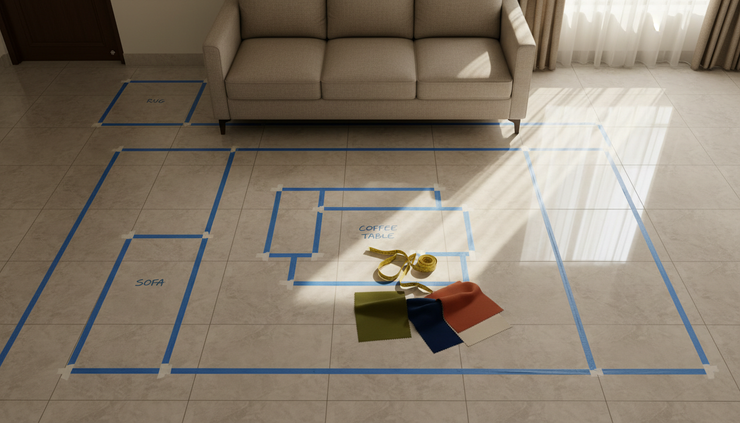
Use masking tape on the floor to mark the furniture footprint. This simple step shows how the piece will feel in real space.
Choose living room furniture around conversation
The living room should support both everyday lounging and guest seating. Start with the sofa, then build around it.
For compact flats, consider:
Sofas with slim arms
Raised legs that show more floor
Nesting tables instead of one large centre table
TV units with closed storage
Lighter upholstery shades with washable or easy-care fabrics
For larger homes, a sectional sofa or a sofa with accent chairs can create a more complete seating zone. Keep the centre table proportional. If it is too small, it looks lost. If it is too large, movement becomes awkward.
Make the bedroom calm and practical
A bedroom needs comfort first. Choose the bed size according to both sleeping needs and room size. A queen bed often works better than a king in tighter rooms because it leaves space for circulation.
Storage beds are useful, but check access. Hydraulic storage is convenient for items used less often. Drawers are better for regular use if there is enough side clearance.
Wardrobes should match real habits. Hanging space matters for shirts, dresses, coats, and occasion wear. Shelves work for folded clothes. Drawers help with smaller items. A mirror-front wardrobe can make a compact room feel larger, but it also needs regular cleaning.
Pick dining furniture for the way meals happen
A dining table should match the number of people who eat together most days, not only the largest gathering of the year. Extendable tables can help if space allows.
Round tables suit smaller groups and soften tight corners. Rectangular tables work well in longer rooms. Benches can save space, but chairs are usually more comfortable for long meals, older family members, and guests.
Check chair weight and back support. Dining chairs are moved often, so they should feel sturdy without being hard to handle.
Use accent pieces with purpose
Accent chairs, consoles, bookshelves, shoe cabinets, side tables, and display units can complete a home, but they should earn their space.
Before buying an accent piece, ask one question: what will it do every week?
If the answer is only “look good”, it may still be worth buying, but only after the main furniture is settled. A console near the entrance can hold keys and décor. A side table beside a lounge chair can support reading. A storage bench can help in a bedroom or passage.

Buying tips that help avoid regret
Premium furniture is a long-term decision. A little planning can prevent expensive mistakes.
Check scale, not just dimensions.
Two sofas may have the same length, but one may look heavier because of thick arms, a low back, or bulky cushions. Visual weight matters.
Request finish and fabric clarity.
Colours can look different in showroom lighting, daylight, and phone screens. If possible, view swatches or compare against your wall colour, flooring, and curtains.
Think about maintenance.
Glossy finishes, pale fabrics, glass tops, and carved details all need different care. Choose based on your lifestyle, not only the look.
Plan around children, pets, and guests.
Rounded corners, sturdy frames, stain-conscious fabrics, and easy-clean surfaces can make daily life easier.
Do not rush matching sets.
A full matching set can look too uniform. Mixing pieces within the same wood tone, shape language, or colour family often creates a more personal home.
Look at the underside and back.
Quality does not stop at the front. The back panel, drawer base, stitching edges, and leg fixing can reveal how carefully the piece has been made.
Ask about delivery and assembly.
Large furniture needs careful handling. Confirm whether the piece comes assembled, semi-assembled, or flat-packed, and check whether it can pass through doors, lifts, and staircases.
A simple room-by-room guide
Space | Best furniture focus | Useful buying tip |
Living room | Sofa, centre table, TV unit | Keep walking paths open and choose seating depth based on comfort |
Bedroom | Bed, wardrobe, bedside tables | Prioritise storage access and calm finishes |
Dining area | Table, chairs, sideboard | Match table shape to room shape |
Entryway | Shoe cabinet, console, bench | Choose slim pieces that do not block movement |
Study corner | Chair, compact table, bookshelf | Focus on posture and cable control |
Balcony or sit-out | Weather-suitable seating | Check material care for sun and moisture |
This table is only a starting point. A home with young children, frequent guests, or multigenerational living will need different choices from a single-person apartment. The right furniture supports the real routine of the home.
The final takeaway
Willowood Premium Furniture stands out most when viewed through three filters: how it is made, how it looks, and how well it fits daily life. Craftsmanship gives a piece strength. Style gives it character. Careful selection makes it belong in the home.
Before buying, slow the process down. Measure the room. Study the finish. Sit on the chair or sofa if possible. Check storage access. Picture the piece on an ordinary weekday, not only during a festive gathering or showroom visit.
The best furniture does not demand attention every time someone enters the room. It quietly improves the way the home feels, works, and welcomes people, day after day.


Comments